


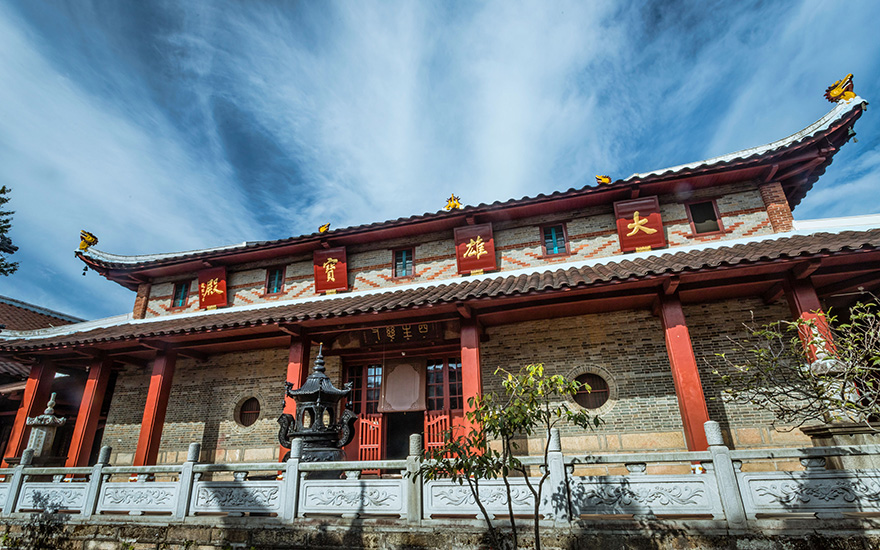
Daxiong Baodian, Mahavira (Great Hero) Treasure Hall at the Zhen Ru Chan Temple, Jiangxi, China.
This article is about the Zhen Ru Chan Temple, located on the south-western slopes of Yunju Mountain, Jiangxi Province. It is said that the surrounding peaks resemble lotus petals, giving the temple a poetic landscape often described as “lotus peaks clustering around Huatai”. Huatai is the central peak area of Yunju Mountain. This quote emphasizes the temple’s harmony with nature. This can be seen in the video of the temple shown below.
The temple’s name, Zhen Ru, means “True Suchness,” a core concept in Chan Buddhism referring to ultimate reality beyond conceptual thought. Founded during the Tang Dynasty (806-810), it is considered the cradle of the Caodong (Soto-Japanese) school of Chan (Zen-Japanese) Buddhism. It is revered as one of the three model temples in China. Its current structure was rebuilt in the 1950s, preserving traditional Chinese architectural styles.
Master Xu Yun (1840-1959), a towering figure in modern Chan Buddhism in China, spent time here and passed away at the temple. Master Xu Yun found the temple in ruins when he arrived there in the early 20th century. He led a massive restoration effort, rebuilding halls, pagodas, and monastic quarters with support from lay donors and disciples. He reestablished strict monastic discipline and meditation practice, restoring its spiritual authority. His memorial stupa and relics are enshrined there, making it a pilgrimage site for Chan practitioners. The almost 8 hour audiobook video below provides an autobiography of the Chinese Zen Master Xu (Hsu) Yun:
The next video also shows the temple’s association with the principle of “agriculture and Zen equally emphasized”, meaning monks practiced farming–caring for their tea plants–alongside meditation. They highlight a holistic lifestyle: meditation nourishes the spirit, farming nourishes the body, and together they form a complete path. Monasteries like Zhen Ru Chan Temple were often located in remote mountains. Farming ensured survival without reliance on outside donors. Working the land was seen as a form of Chan practice — repetitive, mindful, and grounding. Cultivating fields also aligned with Chan’s emphasis on harmony with the natural world. This followed the Caodong ideal of no separation between sacred and the mundane. Plowing a field was as sacred as chanting sutras. The monks alternated between meditation sessions and agricultural work, embodying the Chan dictum: “A day without work is a day without food.” This phase has been attributed to the Tang‑dynasty Chan master Baizhang Huaihai (720–814), a disciple of Mazu Daoyi (709-788) who was credited with establishing the monastic regulations of Chan Buddhism.
This is primarily a video demonstration of the moving meditation practiced at Zhen Ru Chan Temple. This form of meditation was also demonstrated at the recent special meditation retreat held at the Benevolence Temple in Las Vegas, Nevada. The monk who led that meditation had practiced at the Zhen Ru Temple.
The view of the stupa of the Song-dynasty Chan Master shown below is located outside of the monastic quarters of Zhen Ru Chan Temple.
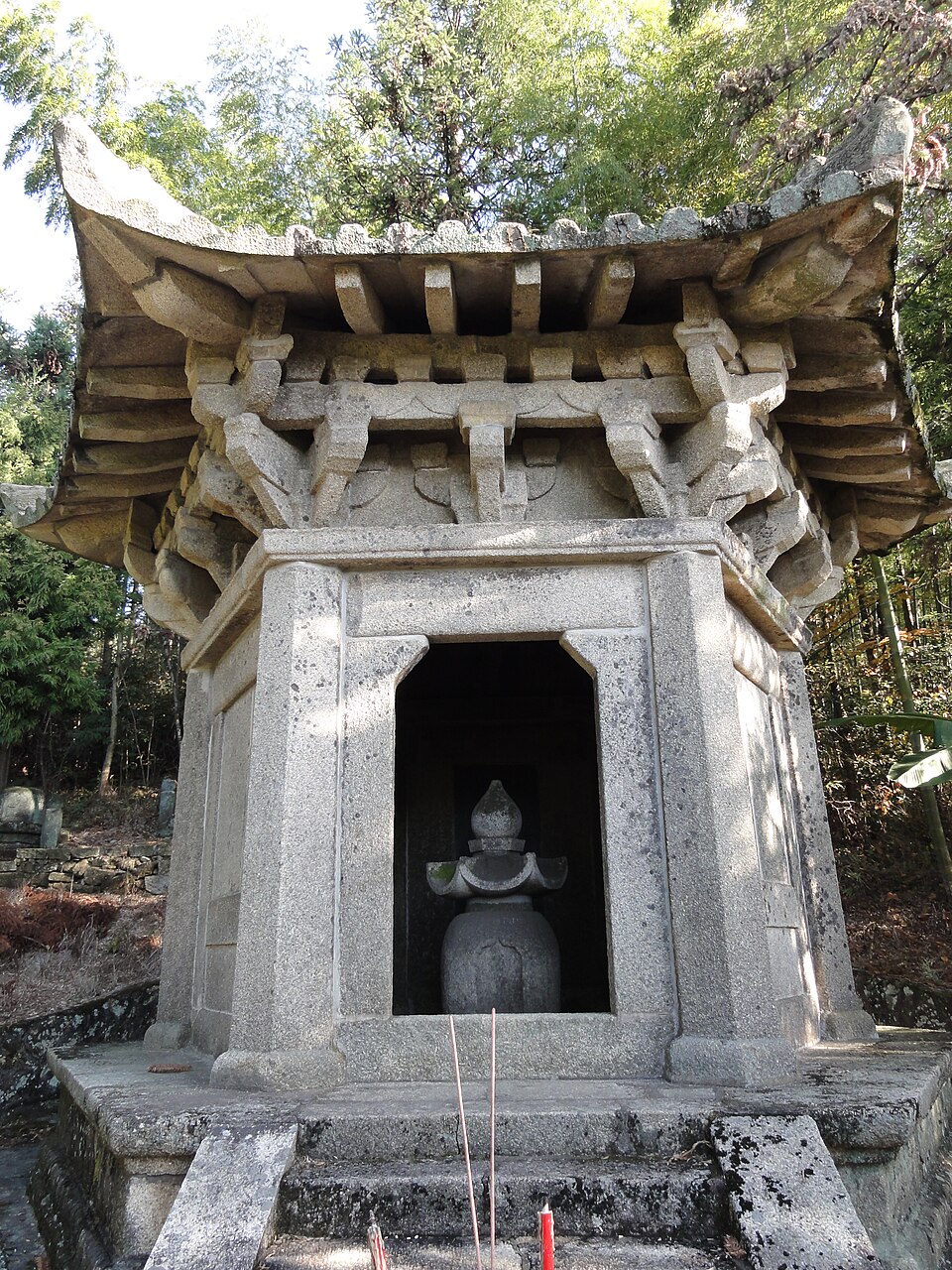
“Stupa of Chan Master Xinkong, Eminent monk of the Song dynasty. It rises in solemn stillness, to the northeast beyond the monastic halls. A tower of remembrance, its silhouette a beacon of true suchness.”